Vertra
A housing platform built to help people evaluate homes and neighborhoods without leaving home.

I co-founded Vertra to bridge the gap between seeing a listing and actually knowing what it's like to live there. We wanted to move beyond just 'photos of rooms' to give people context of their future daily life.
The real estate market is very competitive, yet most platforms show only the property itself. We saw an opportunity in going beyond square footage and showing what daily life around a home looks like, so people could decide with the full context.
Product VisionPart of the house search process happens outside, which makes mobile a priority. I designed a map-focused architecture to deliver local data when it's needed, helping people decide whether a home is worth a visit.
Design DeliveryThe lack of information on listing pages and about the area makes the home search much longer
- Most platforms prioritize inventory quantity over neighborhood quality. I found a critical lack of "street-level" data that helps users visualize daily life remotely.
- Benchmarking showed users jumping between 10+ tabs to evaluate one listing. This "tab-hopping" creates massive cognitive load and slows down the decision.

I led the product vision from day one, focusing on translating complex location and real estate data into a mobile map-first journey
Research insights guided the process towards building an experience that delivers location features (like real commute times & neighborhood vibe) so people can make high-stakes housing decisions with confidence.
Design ObjectiveMy role | Co-founder & Lead PD
Understanding how people evaluate homes without visiting them: 5 interviews to immerse on the user's voice
- Conducted interviews and behavioral analysis with prospective renters and buyers.
- Benchmark: I defined the must-have information set that allows a user to trust a location before they ever book a visit.
- Moodboards & design ideation to explore how to combine visuals & data in a map to give users a full picture without overwhelming them.
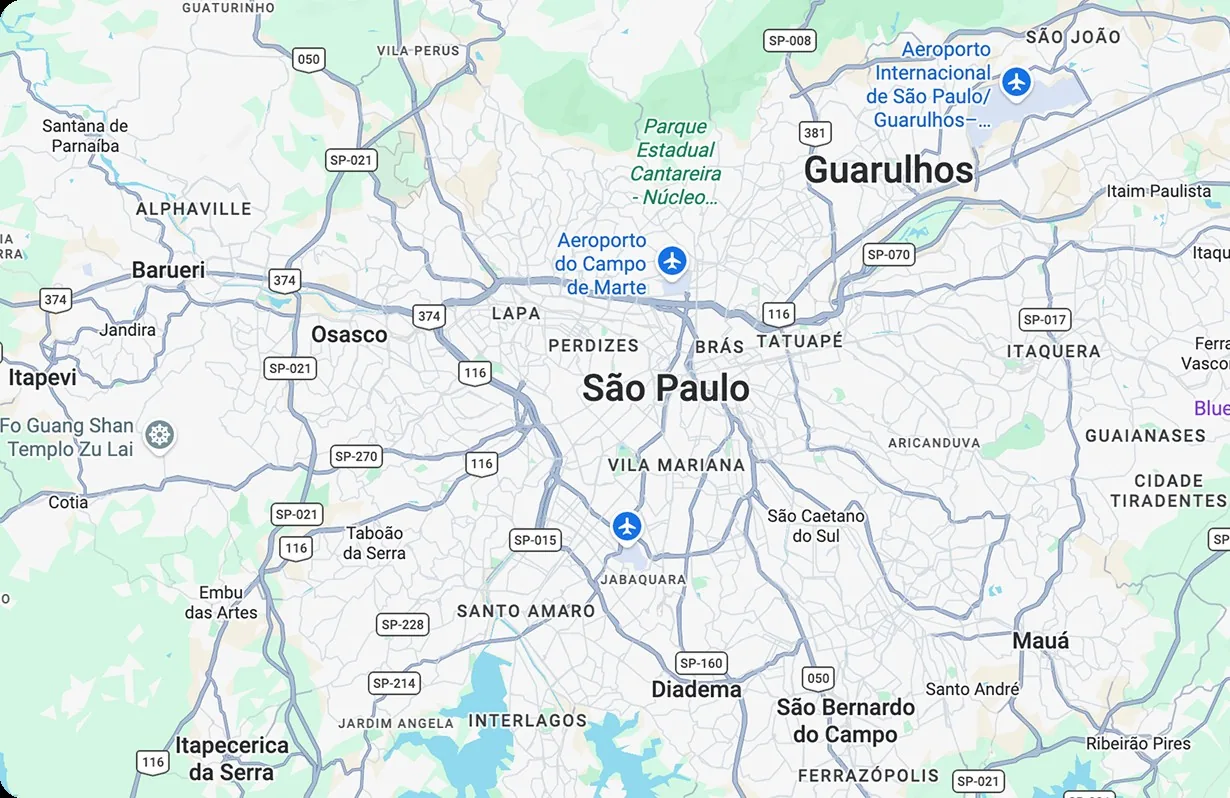
House hunting is tiring, and good information about the property and neighborhood is hard to find
- I noticed users felt neighborhood info was too generic to reflect their daily lives.
- Transport options were disconnected from the listings, so users relied on other platforms like Google Maps, spending more time and effort.
- Low-quality photography made it harder to convince users to book a visit.
"I've wasted a lot of time visiting apartments I didn't like, having more information upfront would save a lot of time."
"Mobility options and info about the surroundings is poor or not available on the property listing."
"Photos and videos don't capture details or atmosphere, the image quality is often low."
+ Homes are also evaluated through routine & lifestyle.
Uncovering where & how traditional property search experience breaks down
+I used user interviews & market research as resources to map the gap in traditional listing platforms. To understand opportunities for real impact, I mapped what users did and how they felt through different steps of the journey.
User Journey Map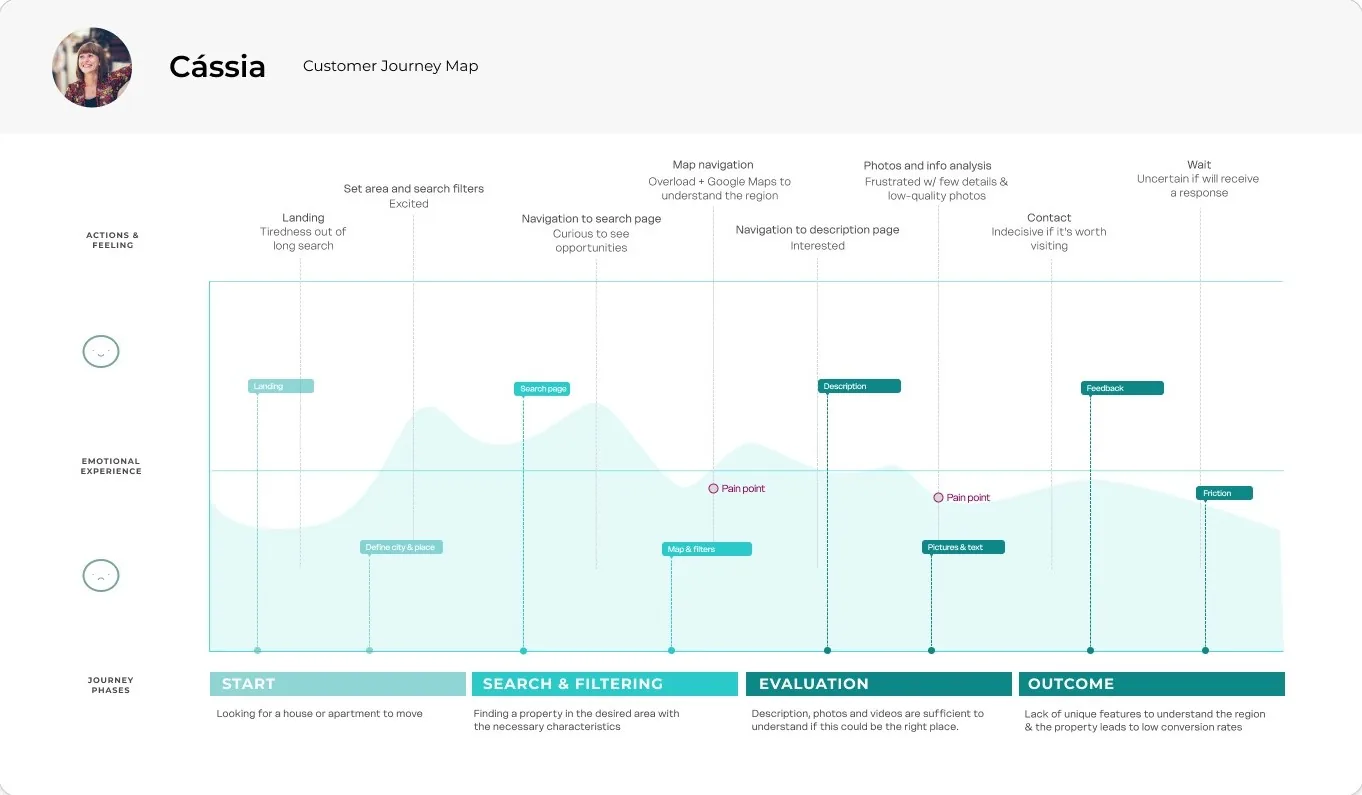
A mobile journey built around a map-first experience
- The map is the core of every flow, placing the quality of life in the neighborhood in focus.
- Competitive tools differentiated Vertra from the market, we introduced transit, commute and services filters on the map.
- We used UX Writing strategy to improve communication with users, and to achieve better placement on search results.
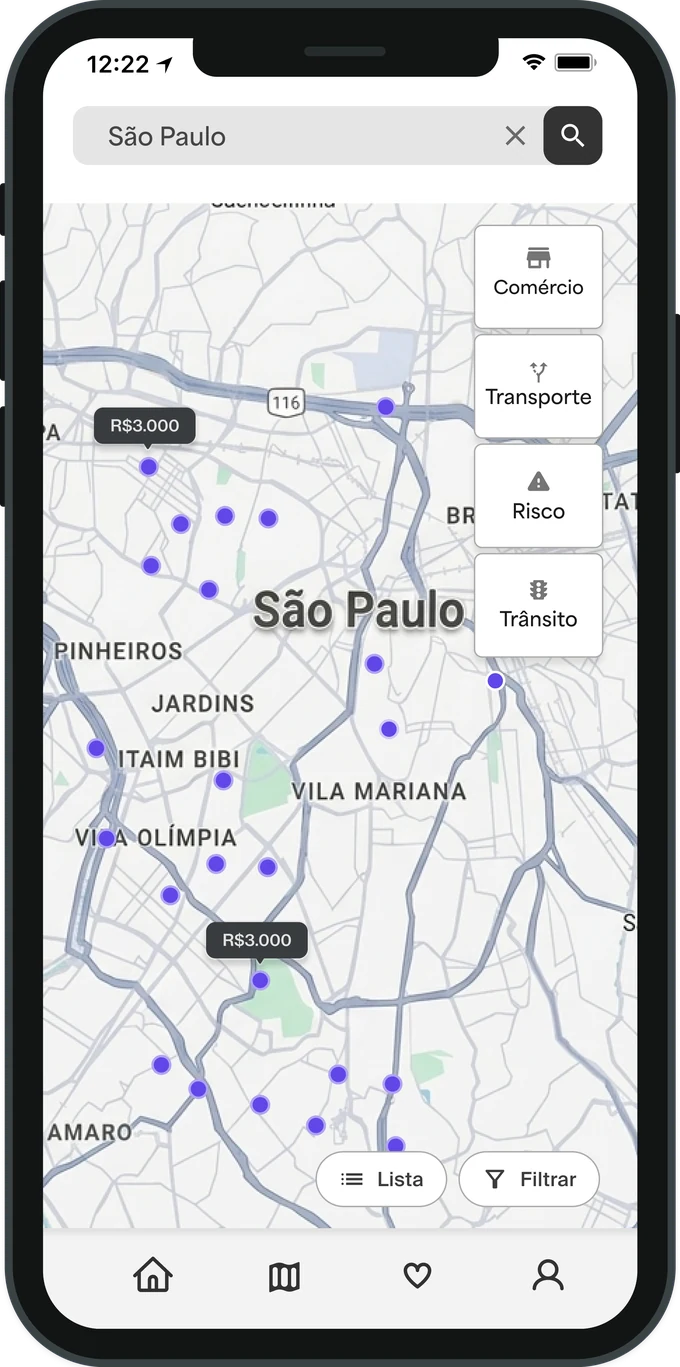
Designing a location: map-first search experience
+A search experience built for the real world. I integrated commerce, traffic, and safety layers into the map so users could finally understand their future neighborhood without switching tabs.
Discovering the
area around a home
through guided
interaction
I simplified the commute engine through a guided interaction that feels like a conversation, so users can see how a home fits into their daily routine.
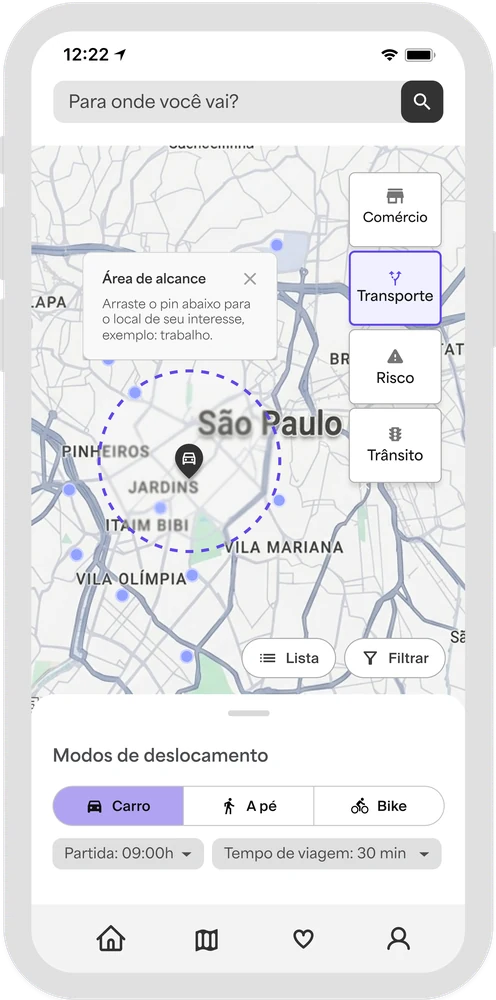
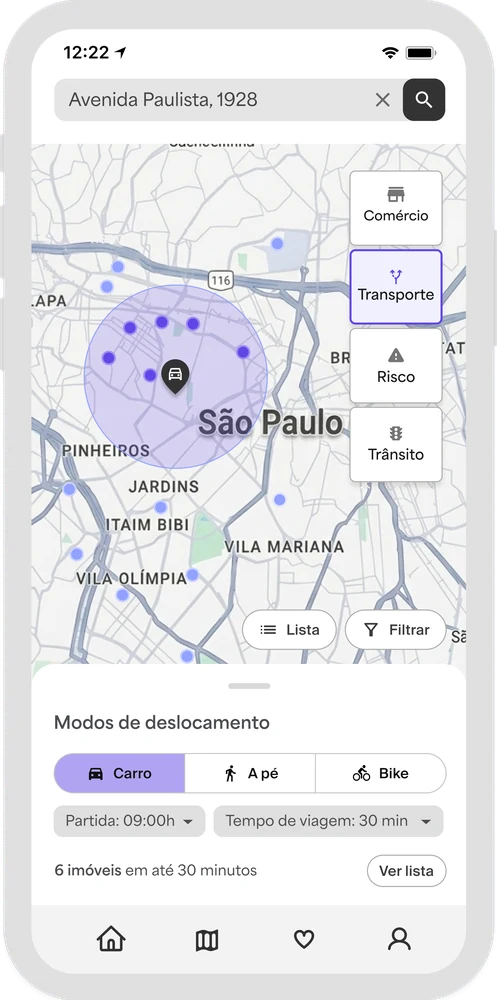
Commute time became a core decision factor
The experience includes custom filters for travel time from each property. Based on the person's routine, the map instantly highlights the homes that fit it, for example, apartments within a 30-minute commute to work, along with other home options nearby.
Immersive search experience
with quality information
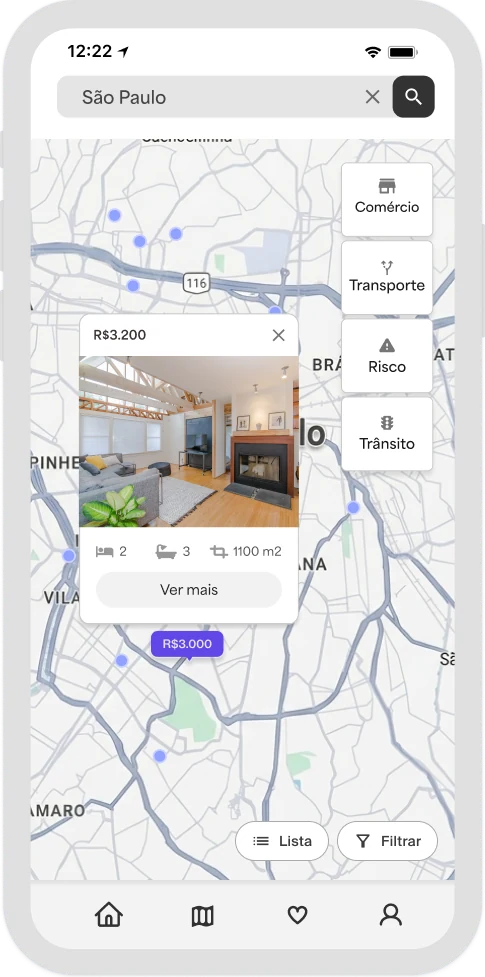
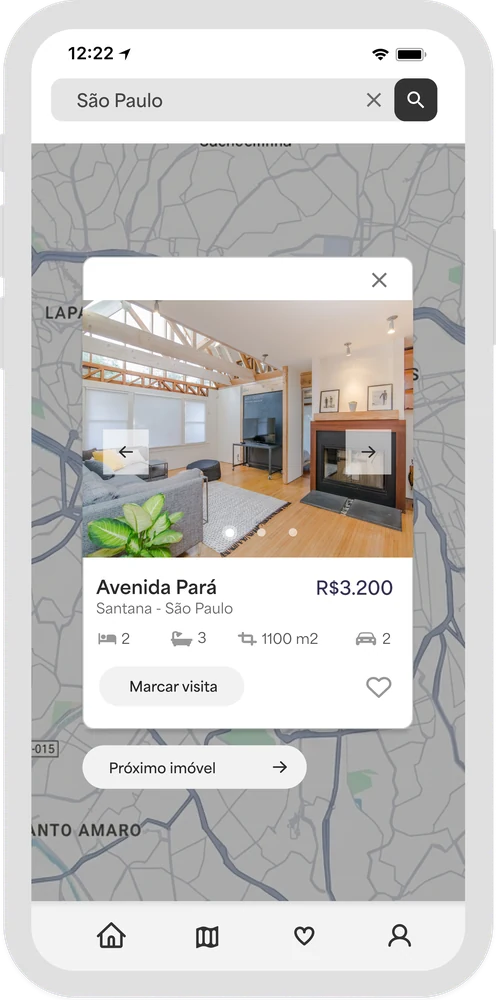

Giving people better information before visiting led to 18% more conversions
+In a competitive market, giving people tools to assess a property and its surroundings before visiting it could save them from wasted visits and make the search faster.
2K+ monthly organic visitors driven by SEO & UX Writing
+500 direct property actions